Where Hornets Are Queens and Not Pests: A Journey Into the Land of Hills
Femi Ezhuthupallickal Benny on her recent fieldwork in Nagaland, India — first prize, Doctoral School Blog Competition 2025.
What comes to mind when you hear “hornets”?
For most people, it’s fear, hatred, stings and danger. But if you ask me, it sparks curiosity — which species is it? Where was it spotted? What was it doing? You cannot expect otherwise from someone doing a PhD on the ecology and behaviour of hornets, focusing on the Asian giant hornet (Vespa mandarinia).
Ranked by BBC Wildlife as the world’s sixth most dangerous insect, the Asian giant hornet has been in the spotlight since 2019, following its invasion of Washington, USA and British Columbia, Canada — earning it the dramatic nickname “the murder hornet.” How murderous are they really? That’s something to study from their homeland — East, South and Southeast Asia. My journey to study the hornets took me to Nagaland, India: the land of hills, the home of the Nagas, and the Indian state with the highest diversity of hornets. I’m looking at how the indigenous Naga people co-exist with these many “murderous” hornets.
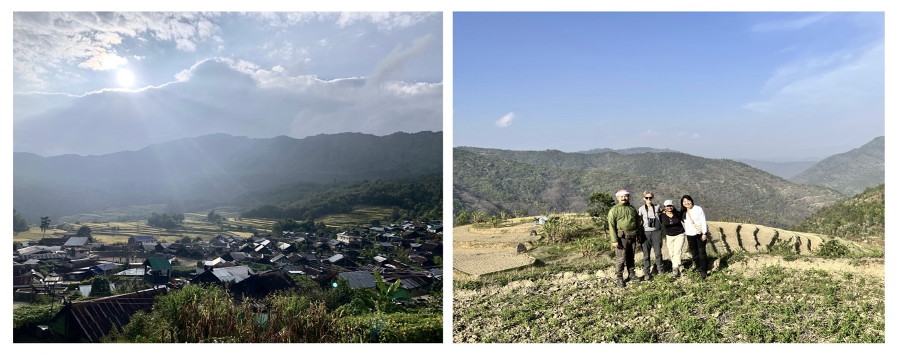
Stepping into the home of hornets
When I arrived in Nagaland, it wasn’t just the dreamy landscape that fascinated me, but the way of life of the Naga people, deeply rooted in nature. My research took me to two major indigenous communities — the Angami and the Chakesang, in Kohima and Phek districts respectively.
Insects, especially social wasps, aren’t just part of the landscape here — they’re part of the culture. Among them, hornets of the genus Vespa hold a special place, and Vespa mandarinia — the infamous murder hornet — is the most revered. Far from being seen as pests or dangerous, they’re a prized delicacy and a source of livelihood. Over generations, the Naga people have mastered the art of semi-domesticating these insects, harvesting them with traditional methods and selling them for a substantial part of their annual income.
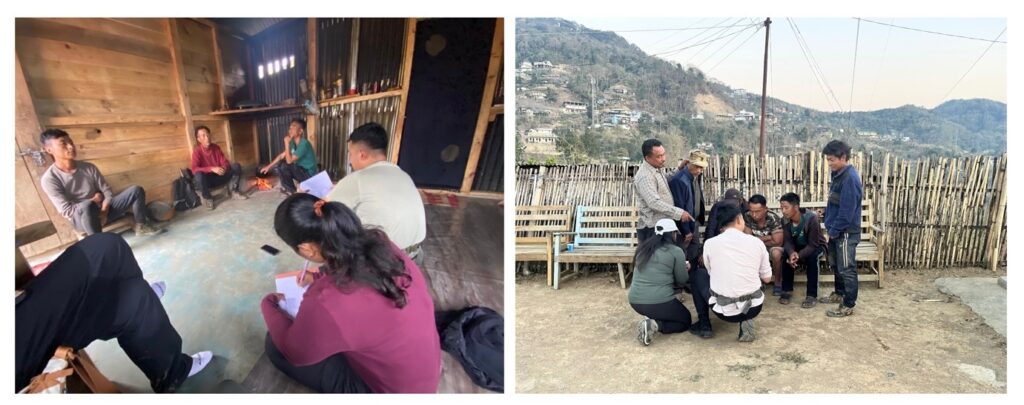
People here don’t panic on seeing a hornet — they approach them with care and skills backed by age-old traditional knowledge. They know where nests are, even if they’re ten kilometres deep in the community forests. They know when larvae have hatched and when workers and reproductives have emerged. They follow the hornets as they emerge from hibernation and locate their initial hives, which are relocated to a convenient spot inside the community forest, left to grow, and harvested during September–October. Harvested hives of Vespa mandarinia sell for prices as high as £500.
My PhD: more than just hornet ecology
When I began this PhD, I thought it would be all about hornets — their behaviour and ecology. I never imagined it would also be about people. Spending time with these communities in the hills of Nagaland has made me understand that here, the boundary between the human and insect worlds blurs. Studying hornets means listening to farmers, hunters, elders, and children; learning local names, customs, and culture. These practices hold ecological wisdom that scientific papers often miss — when hornets are most aggressive, how weather affects them, how to avoid provoking them.
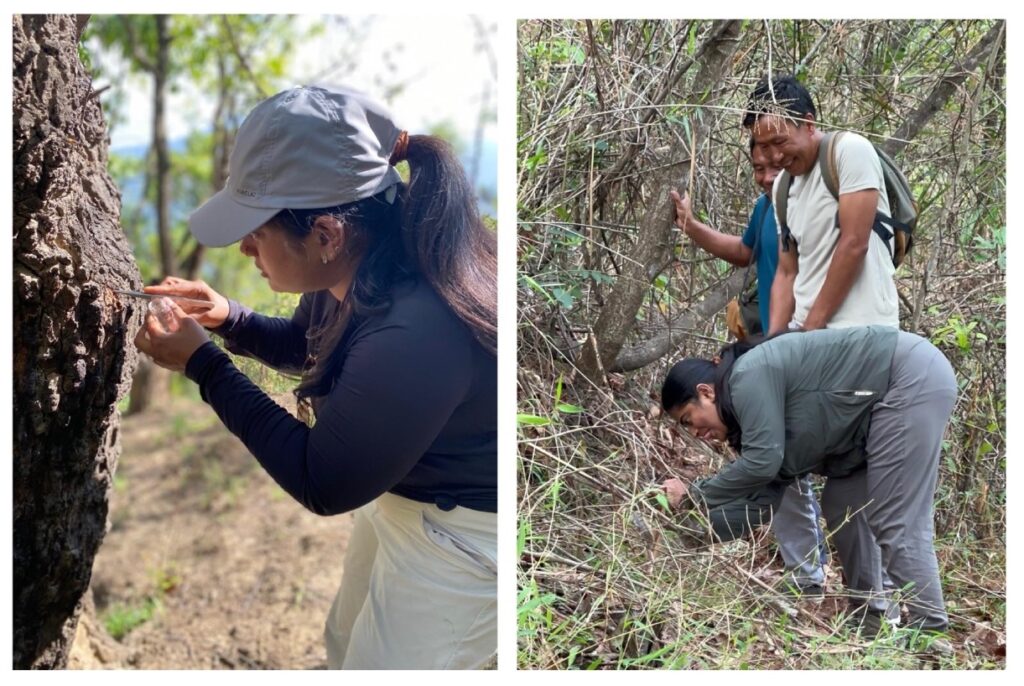
As I collect data on hornet colonies, I’m also collecting stories — of stings, escapes, harvests, and rituals. In doing so, I’m learning that my PhD is a bridge not just between London and Nagaland, but between two ways of knowing the world: one through scientific field notes, and the other through lived experience.