Ecology and Human Interactions
Wasps play a huge role in shaping their ecosystems, through pollination, predation, and parasitism. Their diversity of species, behaviour and ecological roles is astounding, and their capacity to benefit humans is unparalleled — and yet they have one of the worst reputations of any insect worldwide. We want to know:
- How are wasps shaping plant and invertebrate communities through pollination, predation and parasitism?
- How are wasps benefiting humans through the ecosystem services they provide?
- How can wasps’ natural behaviours be put to use for pest control and other services?
- How can citizen science change minds and create amazing new datasets?
- How do we change people’s perceptions of wasps and share the #wasplove?
Read about how we use citizen science to power UK social wasp research in The Big Wasp Survey (not yet converted to this new site).
Human interactions
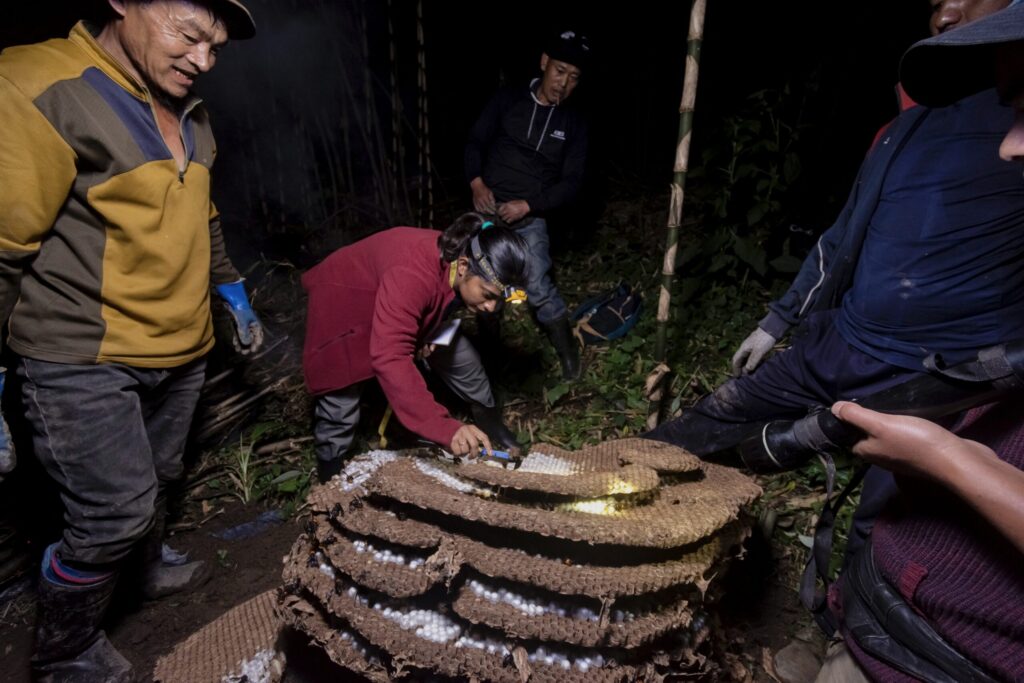
Human societies have long interacted with insects in ways that shape food systems, beliefs, and our understanding of the ecosystem. Traditional ecological knowledge is increasingly recognised as invaluable for understanding human-environment interactions and informing conservation and sustainability science. The knowledge held by local communities, like organic farmers, can inform nuanced ways of understanding human-nature interactions. We use mixed methods from anthropology to ecology to understand how different communities interact with insect ecology and conservation.