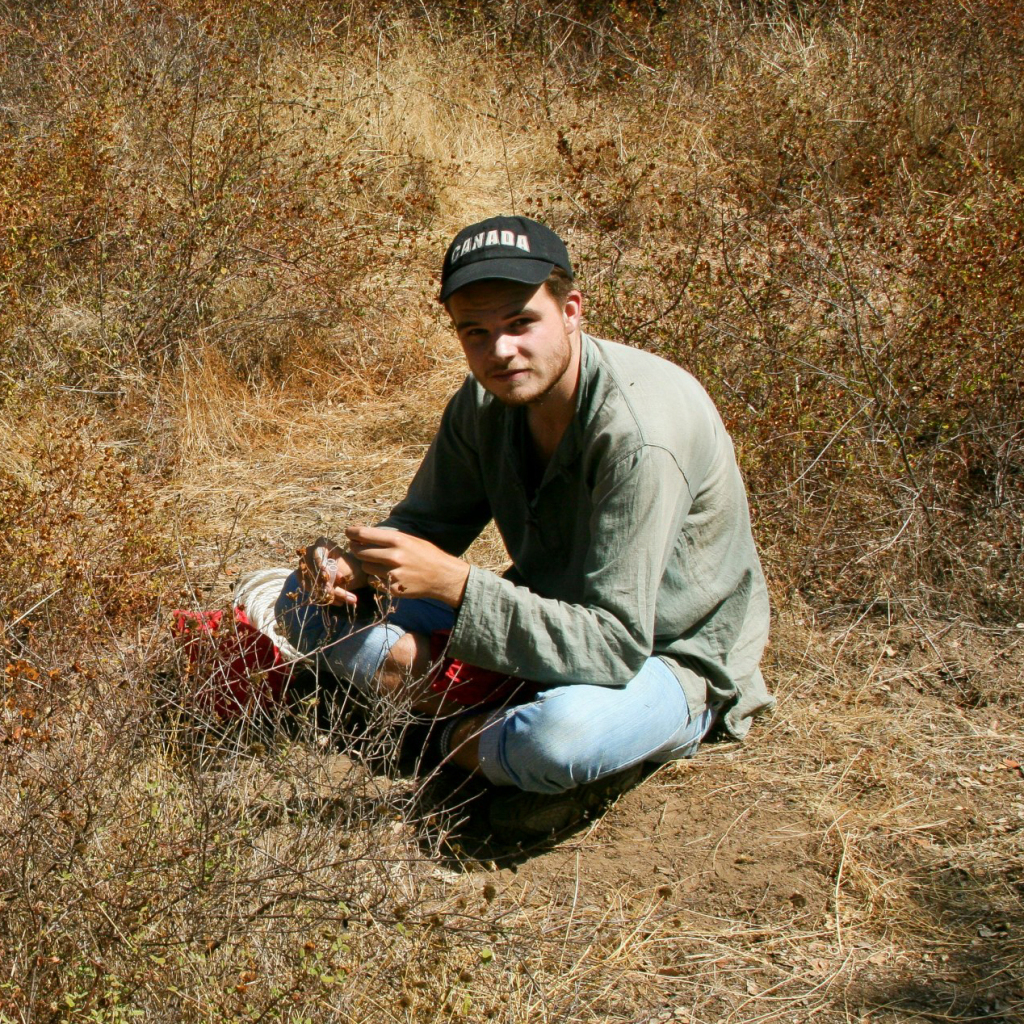
Sam Duckerin
PhD Student, Pesticide Effects on Bumblebee Social Networks (now Dr Duckerin)
Former lab member
Congratulations to Sam for becoming Dr Duckerin in Nov 2018! Sam is now travelling the world.
Position: PhD Student. Completed!
Project: Effects of pesticides on bumblebee social networks
Research Interests: We rely on insect pollinators for a third of all the food we eat, and for contributing over $200 billion to the global economy every year. Wild pollinators such as bumblebees are not only valuable to crop production but also play a key role in maintaining our natural ecosystems. These pollinators are suffering dramatic population declines worldwide, and there is great concern that pesticides could be playing a significant role. There is mounting evidence that pesticides impair the behaviour of bees, yet we lack a complete explanation of how these neurotoxic chemicals affect bees from the level of the gene to the level of the colony. Could these insects be suffering pesticide “hangovers” that change the way they interact with their nestmates?
I focused on the social behaviours of bumblebees, using a combination of automated video tracking and social network analysis to explore how the effects of pesticides on individual behaviour can have a knock-on effect on colony social structure. Field-realistic doses of pesticides may alter the way individuals interact and exchange information, potentially leading to sub-optimal colony performance. This research helps inform more sustainable decisions about how we manage crops and protect pollinators.
This project was funded by the BBSRC as part of the South West Doctoral Training Partnership.
Background
- 2014–present: PhD Candidate, University of Bristol
- 2013–2014: Research Collaborator, Bionanoscience Group, University of Bristol
- 2010–2013: BSc (Hons) Biology, University of Bristol
Contact: sam.duckerin@bristol.ac.uk