<?xml version="1.0" encoding="utf-8"?><feed xmlns="http://www.w3.org/2005/Atom" xml:lang="en-GB"><generator uri="https://jekyllrb.com/" version="4.4.1">Jekyll</generator><link href="https://sumner-lab.github.io/website/feed.xml" rel="self" type="application/atom+xml" /><link href="https://sumner-lab.github.io/website/" rel="alternate" type="text/html" hreflang="en-GB" /><updated>2026-08-14T17:28:44+00:00</updated><id>https://sumner-lab.github.io/website/feed.xml</id><title type="html">The Sumner Lab</title><subtitle>Insect Research Group, University College London</subtitle><entry><title type="html">Ham or Jam: Wasp Picnic Survey 2026</title><link href="https://sumner-lab.github.io/website/wasp-picnic-survey-2026/" rel="alternate" type="text/html" title="Ham or Jam: Wasp Picnic Survey 2026" /><published>2026-06-12T00:00:00+00:00</published><updated>2026-06-12T00:00:00+00:00</updated><id>https://sumner-lab.github.io/website/wasp-picnic-survey-2026</id><content type="html" xml:base="https://sumner-lab.github.io/website/wasp-picnic-survey-2026/"><![CDATA[<p>Summer time means wasps visiting picnics! Sometimes they go for protein (e.g. ham), other times it’s sugar (e.g. jam). Learning about the type of food wasps are after tells us about their life-cycle and can help us better manage them.</p>

<p><strong>Tell us what you’ve seen wasps do this summer at your picnic in this short survey.</strong></p>

<p>Did your picnic wasp want Ham (protein) or Jam (sugar)? Take part in our <a href="https://qualtrics.ucl.ac.uk/jfe/form/SV_9uCgtFs0qtVLwlo">quick survey here</a>!</p>

<p><strong>Why should I take part?</strong></p>

<ul>
  <li>Wasps are important pest-controllers and pollinators. Read more <a href="https://www.theglobeandmail.com/opinion/article-how-i-learned-to-stop-worrying-and-love-the-wasp-and-why-you-should/">here</a>.</li>
  <li>Learning to share your meal with a wasp can help break the difficult relationship that humans have with wasps. Read more <a href="https://theconversation.com/what-to-do-when-wasps-crash-your-picnic-a-scientists-guide-to-dining-safely-with-these-insects-261589">here</a>.</li>
  <li>2026’s heatwaves are proving challenging for wasps; feeding them a little of your food/drink will help them a little. Read more <a href="https://theconversation.com/where-have-all-the-wasps-gone-this-summer-288535">here</a>.</li>
</ul>

<p><strong>Do you run a cafe, pub, or restaurant?</strong></p>

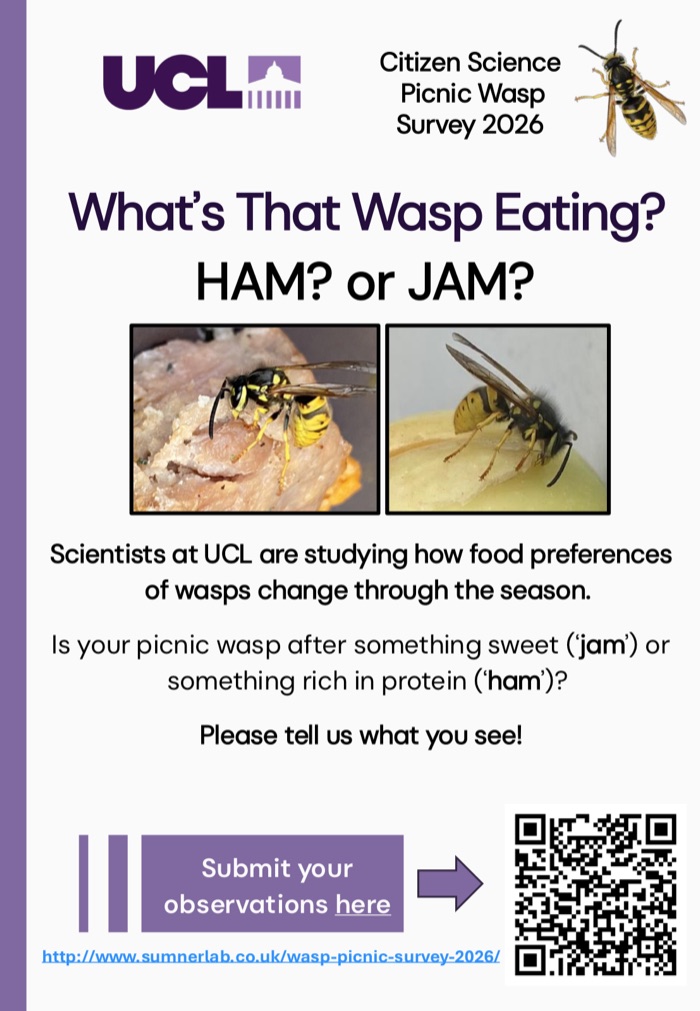
<p>We’d love it if you’d print out this poster and pin it up in your outdoor dining space, to encourage your visitors to take part.</p>

<div class="action-row">
  <figure class="qr-figure">
    <img src="/website/wp-content/uploads/2025/07/WhatsApp-Image-2026-06-13-at-10.20.18.jpeg" alt="QR code linking to the Wasp Picnic Survey 2026" />
    <figcaption>Scan to take the survey</figcaption>
  </figure>
  <figure class="poster-figure">
    <a href="/website/wp-content/uploads/2026/06/ham-or-jam-poster_UCL2026.pdf" target="_blank" rel="noopener">
      <img src="/website/assets/images/ham-or-jam-poster.jpg" alt="Ham or Jam picnic survey poster" />
    </a>
    <figcaption><a href="/website/wp-content/uploads/2026/06/ham-or-jam-poster_UCL2026.pdf" target="_blank" rel="noopener">Open or download the poster (PDF)</a></figcaption>
  </figure>
</div>

<p><strong>Ham or Jam media highlights</strong></p>

<ul class="media-board">
  <li class="media-card" style="--r: -2.2deg;">
    <div class="media-card-inner media-card-text">
      <p class="media-card-outlet">BBC Radio 4 &middot; Today Programme</p>
      <audio controls="" preload="none" src="/website/wp-content/uploads/2026/06/Radio4_Today_310726.m4a"></audio>
      <p class="media-card-meta"><span>Radio</span><span>31 Jul 2026</span></p>
    </div>
  </li>
  <li class="media-card" style="--r: 1.6deg;">
    <a class="media-card-inner media-card-text" href="https://www.thetimes.com/uk/science/article/wasps-weather-feed-insects-heatwave-8dvrwx0rz" target="_blank" rel="noopener">
      <p class="media-card-outlet">The Times</p>
      <p class="media-card-headline">Wasps vanishing thanks to wild weather — and in come the flies</p>
      <p class="media-card-sub">Our stripy friends appear to have dwindled due to variations in the climate as well as pest control.</p>
      <p class="media-card-meta"><span>Read the article &#8599;</span><span>31 Jul 2026</span></p>
    </a>
  </li>
  <li class="media-card" style="--r: -1.3deg;">
    <a class="media-card-inner" href="https://www.telegraph.co.uk/news/2026/07/31/flies-swarm-as-weather-extremes-are-buzz-kill-for-wasps/" target="_blank" rel="noopener">
      <div class="media-card-photo">
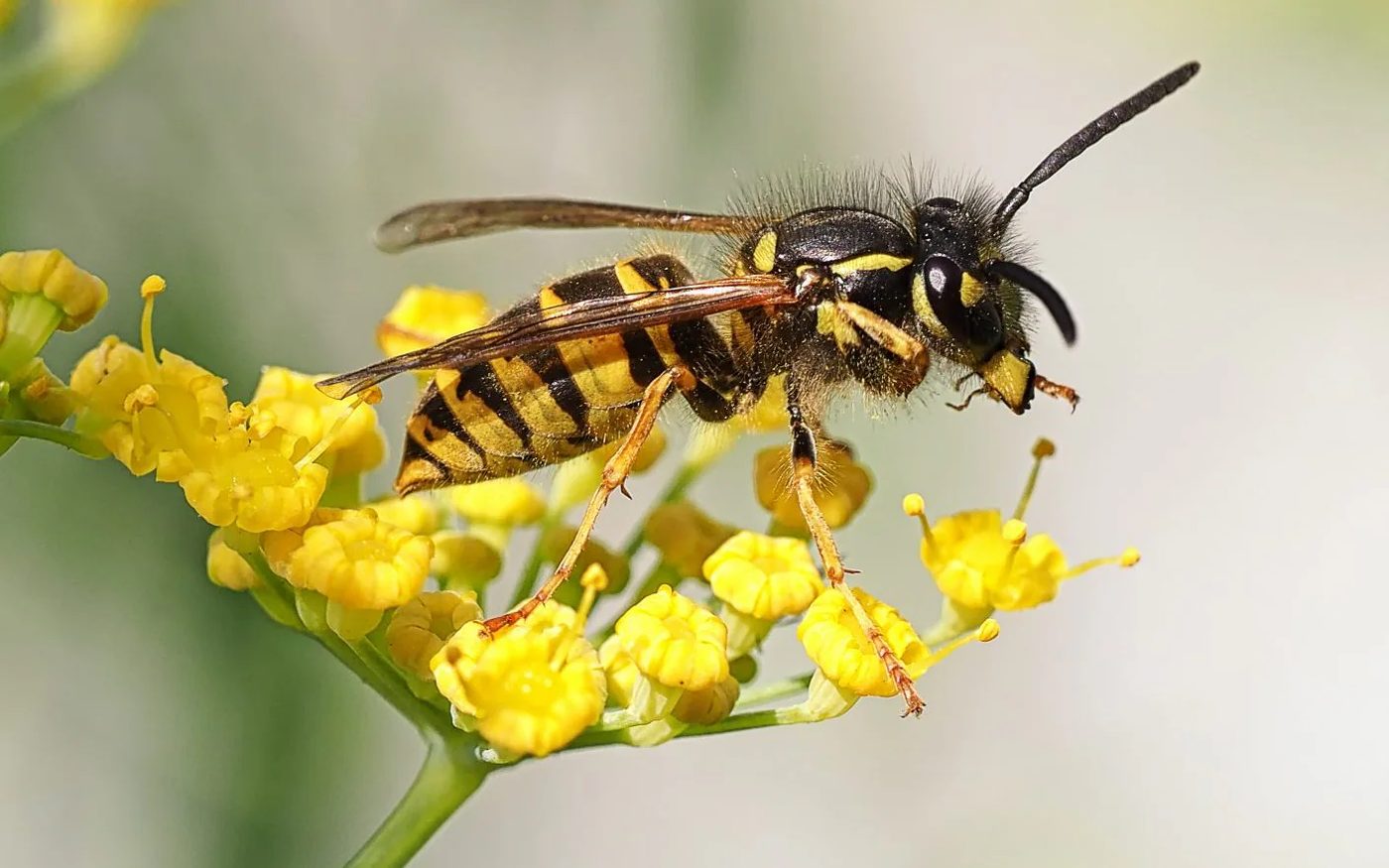
        <img class="media-card-thumb" src="/website/assets/images/telegraph-wasp-fennel.jpg" alt="A wasp on flowering fennel" />
        <span class="media-card-credit">Credit: Jackie Bale</span>
      </div>
      <p class="media-card-outlet">The Telegraph</p>
      <p class="media-card-headline">Flies lord it over wasps after summer weather extremes</p>
      <p class="media-card-sub">Tropical conditions lead to explosion in pest numbers as population of their main predator declines.</p>
      <p class="media-card-meta"><span>Cameron Henderson</span><span>31 Jul 2026</span></p>
    </a>
  </li>
  <li class="media-card" style="--r: 2deg;">
    <a class="media-card-inner media-card-text" href="https://www.thetimes.com/radio/show/20260801-34116/2026-08-01?login=true" target="_blank" rel="noopener">
      <p class="media-card-outlet">Times Radio</p>
      <p class="media-card-meta"><span class="media-play"><span class="media-play-icon" aria-hidden="true"></span>Listen</span><span>1 Aug 2026</span></p>
    </a>
  </li>
  <li class="media-card" style="--r: -1.8deg;">
    <div class="media-card-inner media-card-text">
      <p class="media-card-outlet">LBC Radio</p>
      <p class="media-card-meta"><span>Radio</span><span>1 Aug 2026</span></p>
    </div>
  </li>
  <li class="media-card" style="--r: 1.1deg;">
    <a class="media-card-inner" href="https://theconversation.com/where-have-all-the-wasps-gone-this-summer-288535" target="_blank" rel="noopener">
      <div class="media-card-photo">
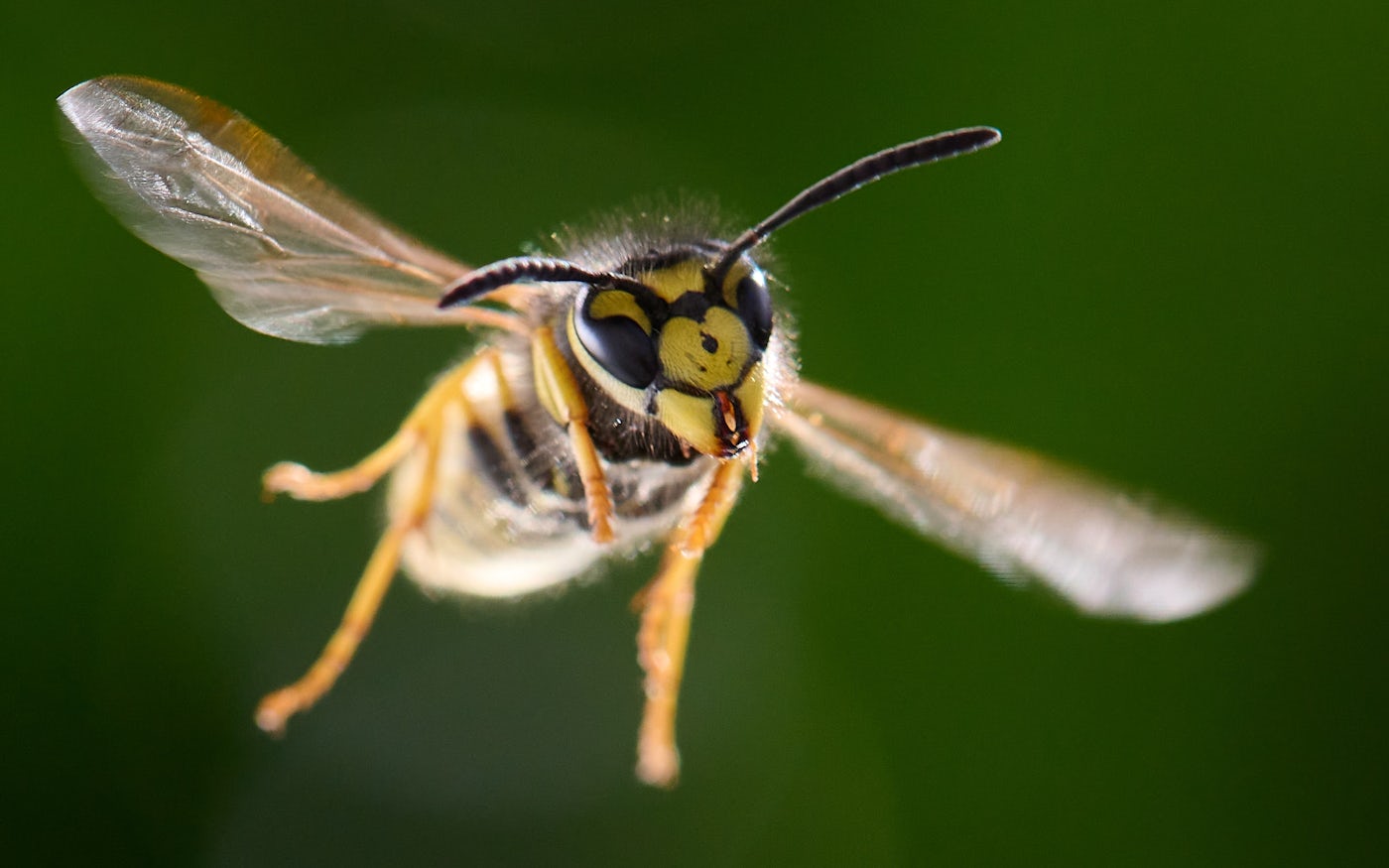
        <img class="media-card-thumb" src="/website/assets/images/conversation-wasps-gone.jpg" alt="A wasp in flight" />
        <span class="media-card-credit">Credit: Dabuch/Shutterstock</span>
      </div>
      <p class="media-card-outlet">The Conversation</p>
      <p class="media-card-headline">Where have all the wasps gone this summer?</p>
      <p class="media-card-meta"><span>Seirian Sumner</span><span>29 Jul 2026</span></p>
    </a>
  </li>
</ul>]]></content><author><name></name></author><summary type="html"><![CDATA[Summer time means wasps visiting picnics! Sometimes they go for protein (e.g. ham), other times it’s sugar (e.g. jam). Learning about the type of food wasps are after tells us about their life-cycle and can help us better manage them.]]></summary><media:thumbnail xmlns:media="http://search.yahoo.com/mrss/" url="https://sumner-lab.github.io/website/wp-content/uploads/2025/07/wasp-on-sausage-1024x768.jpg" /><media:content medium="image" url="https://sumner-lab.github.io/website/wp-content/uploads/2025/07/wasp-on-sausage-1024x768.jpg" xmlns:media="http://search.yahoo.com/mrss/" /></entry><entry><title type="html">Billy Easeman: The Ecological Role of Parasitoid Wasps</title><link href="https://sumner-lab.github.io/website/billy-easeman-parasitoid-wasps/" rel="alternate" type="text/html" title="Billy Easeman: The Ecological Role of Parasitoid Wasps" /><published>2026-05-01T00:00:00+00:00</published><updated>2026-05-01T00:00:00+00:00</updated><id>https://sumner-lab.github.io/website/billy-easeman-parasitoid-wasps</id><content type="html" xml:base="https://sumner-lab.github.io/website/billy-easeman-parasitoid-wasps/"><![CDATA[<p><em>January 2026–May 2026. UCL MRes student Billy Easeman on his MRes research project with the Sumner Lab.</em></p>

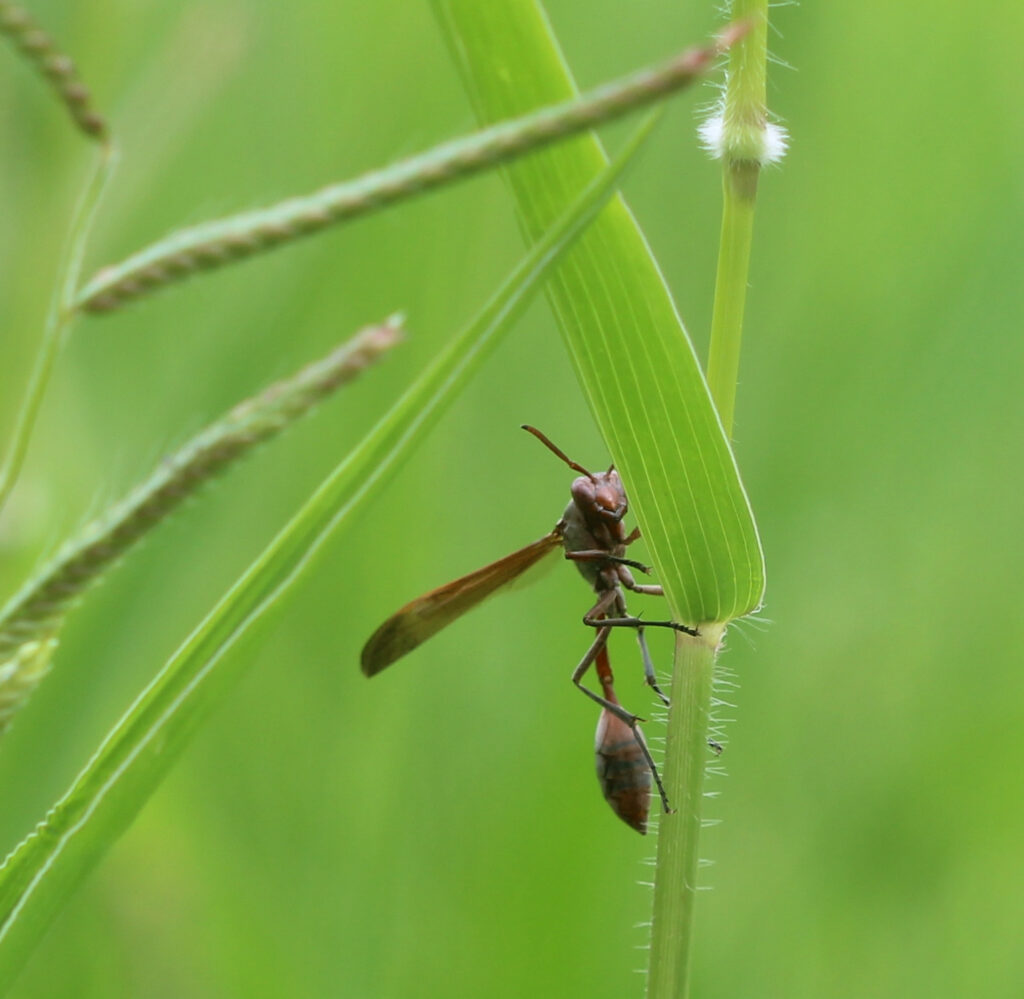
<p>Wasps are an undervalued group of insects with high ecological importance as arthropod regulators, using two major strategies — as parasitoids (solitary, with a larval parasitic stage) and aculeates (predators) — both of which lack good diet information. Billy’s project used DNA metabarcoding of wasp guts to better understand their diets, focusing on parasitoids (can we identify their larval-stage host from remnants of DNA in the guts of adults?) and African social wasps (what do the <em>Belonogaster</em> wasps of Cameroon hunt?). As part of his project, Billy visited our collaborator <a href="https://www.ncl.ac.uk/nes/people/profile/jordancuff.html">Dr Jordan Cuff</a> at Newcastle University, a world expert in using nanopore sequencing to analyse arthropod gut contents.</p>

<p><img src="/website/wp-content/uploads/2026/05/foraging-belonogaster-copy-2-1024x999.jpeg" alt="A foraging worker of Belonogaster juncea, hard at work in an agricultural field in Cameroon. Photo: Seirian Sumner" /></p>]]></content><author><name></name></author><summary type="html"><![CDATA[January 2026–May 2026. UCL MRes student Billy Easeman on his MRes research project with the Sumner Lab.]]></summary><media:thumbnail xmlns:media="http://search.yahoo.com/mrss/" url="https://sumner-lab.github.io/website/wp-content/uploads/2026/05/foraging-belonogaster-copy-2-1024x999.jpeg" /><media:content medium="image" url="https://sumner-lab.github.io/website/wp-content/uploads/2026/05/foraging-belonogaster-copy-2-1024x999.jpeg" xmlns:media="http://search.yahoo.com/mrss/" /></entry><entry><title type="html">Dylan John: Evolution of nesting and prey-use traits in vespid wasps</title><link href="https://sumner-lab.github.io/website/dylan-john-evolution-of-nesting-and-prey-use-traits-in-vespid-wasps/" rel="alternate" type="text/html" title="Dylan John: Evolution of nesting and prey-use traits in vespid wasps" /><published>2026-01-29T00:00:00+00:00</published><updated>2026-01-29T00:00:00+00:00</updated><id>https://sumner-lab.github.io/website/dylan-john-evolution-of-nesting-and-prey-use-traits-in-vespid-wasps</id><content type="html" xml:base="https://sumner-lab.github.io/website/dylan-john-evolution-of-nesting-and-prey-use-traits-in-vespid-wasps/"><![CDATA[<p>UCL Student Dylan John on his MSci Research Project with the Sumner Lab </p>

<figure class="wp-block-gallery has-nested-images columns-default is-cropped wp-block-gallery-1 is-layout-flex wp-block-gallery-is-layout-flex">
<figure class="wp-block-image size-large is-resized">
<a href="/website/wp-content/uploads/2026/01/Eumenes_coarctacus_230820.jpg"><img src="/website/wp-content/uploads/2026/01/Eumenes_coarctacus_230820.jpg" class="wp-image-2383" style="width:465px;height:auto" loading="lazy" decoding="async" data-id="2383" srcset="/website/wp-content/uploads/2026/01/Eumenes_coarctacus_230820.jpg 918w, /website/wp-content/uploads/2026/01/Eumenes_coarctacus_230820-292x300.jpg 292w, /website/wp-content/uploads/2026/01/Eumenes_coarctacus_230820-768x790.jpg 768w" sizes="auto, (max-width: 918px) 100vw, 918px" width="918" height="944" /></a>
</figure>
<figure class="wp-block-image size-large">
<a href="/website/wp-content/uploads/2026/01/70b1e4ca-e574-4c2c-a0c4-436c7f27120f.jpg"><img src="/website/wp-content/uploads/2026/01/70b1e4ca-e574-4c2c-a0c4-436c7f27120f-1024x952.jpg" class="wp-image-2461" loading="lazy" decoding="async" data-id="2461" srcset="/website/wp-content/uploads/2026/01/70b1e4ca-e574-4c2c-a0c4-436c7f27120f-1024x952.jpg 1024w, /website/wp-content/uploads/2026/01/70b1e4ca-e574-4c2c-a0c4-436c7f27120f-300x279.jpg 300w, /website/wp-content/uploads/2026/01/70b1e4ca-e574-4c2c-a0c4-436c7f27120f-768x714.jpg 768w, /website/wp-content/uploads/2026/01/70b1e4ca-e574-4c2c-a0c4-436c7f27120f.jpg 1199w" sizes="auto, (max-width: 1024px) 100vw, 1024px" width="1024" height="952" /></a>
</figure>
</figure>

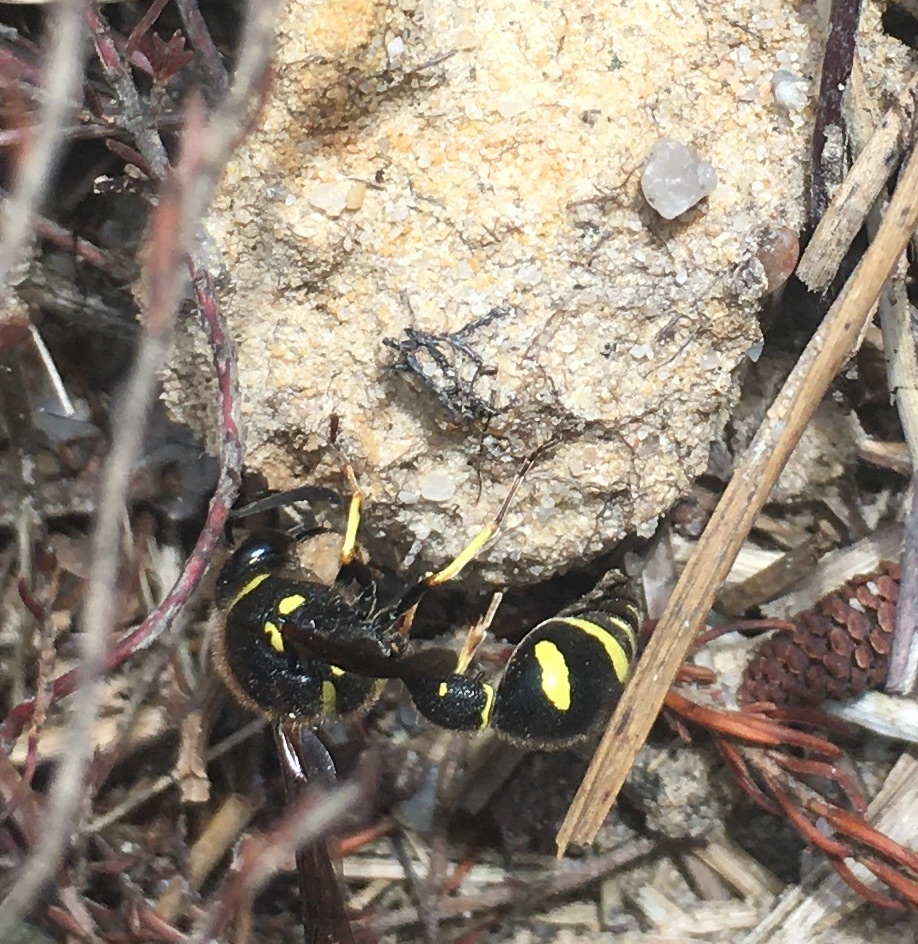
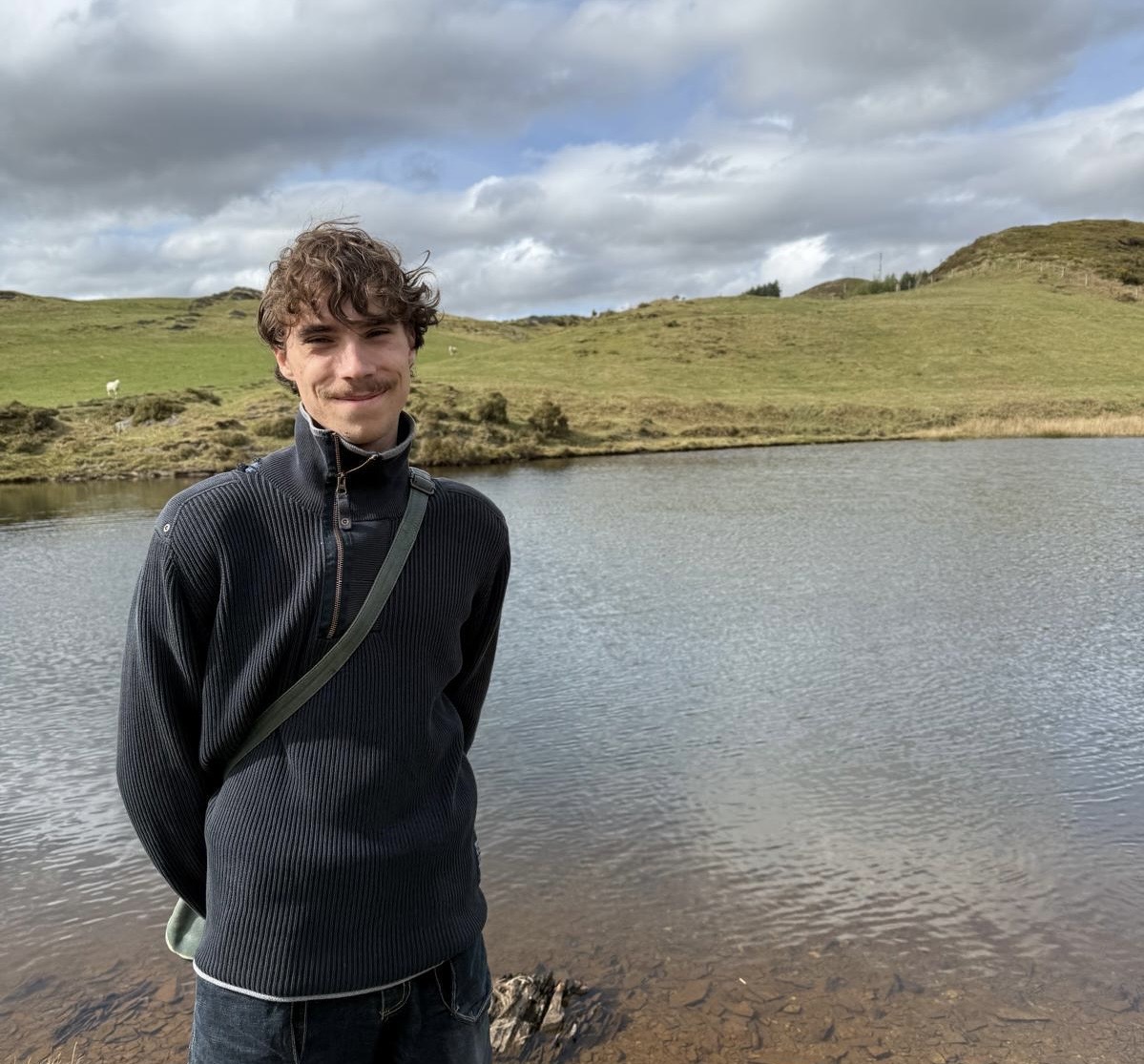
<p>Left: Heath Potter Wasp – <em>Eumenes coarctatus</em> – Dorset, 2021. A solitary potter wasp who provisions her nest with dozens of small caterpillars. Right: MSci student Dylan John, UCL.</p>

<p>The wasp family Vespidae includes the famous yellow jackets that build their large paper fortresses and go about stealing the ham off of your sandwich; but this family is remarkably diverse and exhibits equally diverse nesting and prey-use traits. Across the family, wasp nesting ranges from burrows excavated in soil, to renting pre-existing cavities such as hollow stems, and to constructing free-standing nests made from mud or plant material. Some wasp species are generalist predators, while others are specialists.</p>

<p>For my final year MSci Research Project under the supervision of Prof Seirian Sumner and PhD student Idris Adams, I am investigating the evolution of prey-use and nesting strategies within the vespid subfamily Eumeninae. This involves reviewing literature and compiling a large dataset that captures nesting and prey-use traits, such as nest shape, nest construction material, provisioning mode, and prey identity for as many eumenine wasp species as possible. Another prey-use trait, prey specificity, will be quantified using a phylogenetically informed taxonomic distinctness metric. All nesting and prey traits will then be used for ancestral state reconstruction and to test for correlated evolution of different trait combinations. This will hopefully provide insight into the process of evolution and whether the evolution of a certain nesting character relies on preexisting evolution of a different character; or whether they coevolve for instance.</p>

<p>This project is my first experience of synthesising data from the literature, which comes in all shapes and sizes, such as from tables, figures, and brief natural history observations. I have enjoyed the challenge of figuring out how to standardise this into a dataset fit for analysis. Seirian’s and Idris’ insight has been invaluable, and I am looking forward to being more involved with the Sumner Lab this term!</p>]]></content><author><name></name></author><summary type="html"><![CDATA[UCL Student Dylan John on his MSci Research Project with the Sumner Lab ]]></summary><media:thumbnail xmlns:media="http://search.yahoo.com/mrss/" url="https://sumner-lab.github.io/website/wp-content/uploads/2026/01/Eumenes_coarctacus_230820.jpg" /><media:content medium="image" url="https://sumner-lab.github.io/website/wp-content/uploads/2026/01/Eumenes_coarctacus_230820.jpg" xmlns:media="http://search.yahoo.com/mrss/" /></entry><entry><title type="html">Hoi Lam Daisy Choi: Investigating the Evolutionary Patterns of Diets and Predatory Wasps</title><link href="https://sumner-lab.github.io/website/hoi-lam-daisy-choi-investigating-the-evolutionary-patterns-of-diets-and-predatory-wasps/" rel="alternate" type="text/html" title="Hoi Lam Daisy Choi: Investigating the Evolutionary Patterns of Diets and Predatory Wasps" /><published>2026-01-29T00:00:00+00:00</published><updated>2026-01-29T00:00:00+00:00</updated><id>https://sumner-lab.github.io/website/hoi-lam-daisy-choi-investigating-the-evolutionary-patterns-of-diets-and-predatory-wasps</id><content type="html" xml:base="https://sumner-lab.github.io/website/hoi-lam-daisy-choi-investigating-the-evolutionary-patterns-of-diets-and-predatory-wasps/"><![CDATA[<p><em>*UCL Student Daisy Choi on her BSc Research Project with the Sumner Lab *</em>
Hello, I’m Daisy, a BSc Zoology student completing my final-year research project in the Sumner Lab. I have always been interested in evolutionary genetics, behavioural ecology, and the complex interactions between organisms and their environments.</p>

<p>For my project, supervised by Prof. Seirian Sumner and Idris Adams, I am investigating the evolution of body size in the Sphecidae family. Specifically, I am exploring how body size relates to life-history traits such as prey choice and nesting behaviour across species, to better understand the ecological and evolutionary pressures shaping these solitary predatory wasps. As part of this work, I have had the opportunity to collaborate with curators at the Natural History Museum, where I have used their extensive Sphecidae collections and imaging systems to collect morphological data, gaining hands-on experience with museum-based research and specimen handling.</p>

<p>Overall, I have thoroughly enjoyed working on this project with the Sumner Lab, and the experience has significantly deepened my understanding of research and evolutionary biology.</p>

<figure class="wp-block-image aligncenter size-full">
<a href="/website/wp-content/uploads/2026/01/Daisy_sphecid.jpg"><img src="/website/wp-content/uploads/2026/01/Daisy_sphecid.jpg" class="wp-image-2474" loading="lazy" decoding="async" srcset="/website/wp-content/uploads/2026/01/Daisy_sphecid.jpg 442w, /website/wp-content/uploads/2026/01/Daisy_sphecid-300x206.jpg 300w" sizes="auto, (max-width: 442px) 100vw, 442px" width="442" height="304" /></a>
</figure>

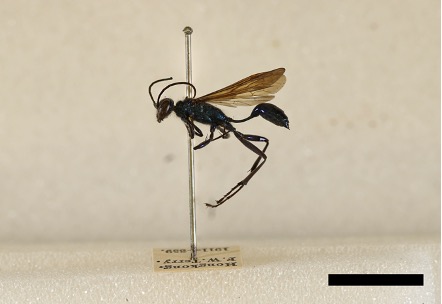
<p><em>One of Daisy’s specimens, from the London NHM.</em></p>

<figure class="wp-block-image aligncenter size-full">
<a href="/website/wp-content/uploads/2026/01/Daisy-Choi.jpg"><img src="/website/wp-content/uploads/2026/01/Daisy-Choi.jpg" class="wp-image-2473" loading="lazy" decoding="async" srcset="/website/wp-content/uploads/2026/01/Daisy-Choi.jpg 586w, /website/wp-content/uploads/2026/01/Daisy-Choi-225x300.jpg 225w" sizes="auto, (max-width: 586px) 100vw, 586px" width="586" height="782" /></a>
</figure>

<p><em>Daisy – outside the UCL Genetics, Evolution and Environment Department, Gower Street.</em></p>]]></content><author><name></name></author><summary type="html"><![CDATA[*UCL Student Daisy Choi on her BSc Research Project with the Sumner Lab * Hello, I’m Daisy, a BSc Zoology student completing my final-year research project in the Sumner Lab. I have always been interested in evolutionary genetics, behavioural ecology, and the complex interactions between organisms and their environments.]]></summary><media:thumbnail xmlns:media="http://search.yahoo.com/mrss/" url="https://sumner-lab.github.io/website/wp-content/uploads/2026/01/Daisy_sphecid.jpg" /><media:content medium="image" url="https://sumner-lab.github.io/website/wp-content/uploads/2026/01/Daisy_sphecid.jpg" xmlns:media="http://search.yahoo.com/mrss/" /></entry><entry><title type="html">Louisa Stefani: Does increased awareness and understanding of wasps change public perceptions of their importance and utility?</title><link href="https://sumner-lab.github.io/website/louisa-stefani-does-increased-awareness-and-understanding-of-wasps-change-public-perceptions-of-their-importance-and-utility/" rel="alternate" type="text/html" title="Louisa Stefani: Does increased awareness and understanding of wasps change public perceptions of their importance and utility?" /><published>2026-01-29T00:00:00+00:00</published><updated>2026-01-29T00:00:00+00:00</updated><id>https://sumner-lab.github.io/website/louisa-stefani-does-increased-awareness-and-understanding-of-wasps-change-public-perceptions-of-their-importance-and-utility</id><content type="html" xml:base="https://sumner-lab.github.io/website/louisa-stefani-does-increased-awareness-and-understanding-of-wasps-change-public-perceptions-of-their-importance-and-utility/"><![CDATA[<p>Sept 2025-March 2026</p>

<p>UCL Student Lousia Stefani on her BSc Research Project with the Sumner Lab. Co-supervised by <a href="https://www.ucl.ac.uk/culture-online/ask-expert/meet-our-experts/tannis-davidson">Tannis Davidson</a> at UCL’s <a href="https://www.ucl.ac.uk/museums-collections/ucl-grant-museum-zoology">Grant Museum of Zoology</a> </p>

<figure class="wp-block-image aligncenter size-large">
<a href="/website/wp-content/uploads/2026/01/me-waspVR1.jpg"><img src="/website/wp-content/uploads/2026/01/me-waspVR1-768x1024.jpg" class="wp-image-2436" loading="lazy" decoding="async" srcset="/website/wp-content/uploads/2026/01/me-waspVR1-768x1024.jpg 768w, /website/wp-content/uploads/2026/01/me-waspVR1-225x300.jpg 225w, /website/wp-content/uploads/2026/01/me-waspVR1-1152x1536.jpg 1152w, /website/wp-content/uploads/2026/01/me-waspVR1.jpg 1200w" sizes="auto, (max-width: 768px) 100vw, 768px" width="768" height="1024" /></a>
</figure>

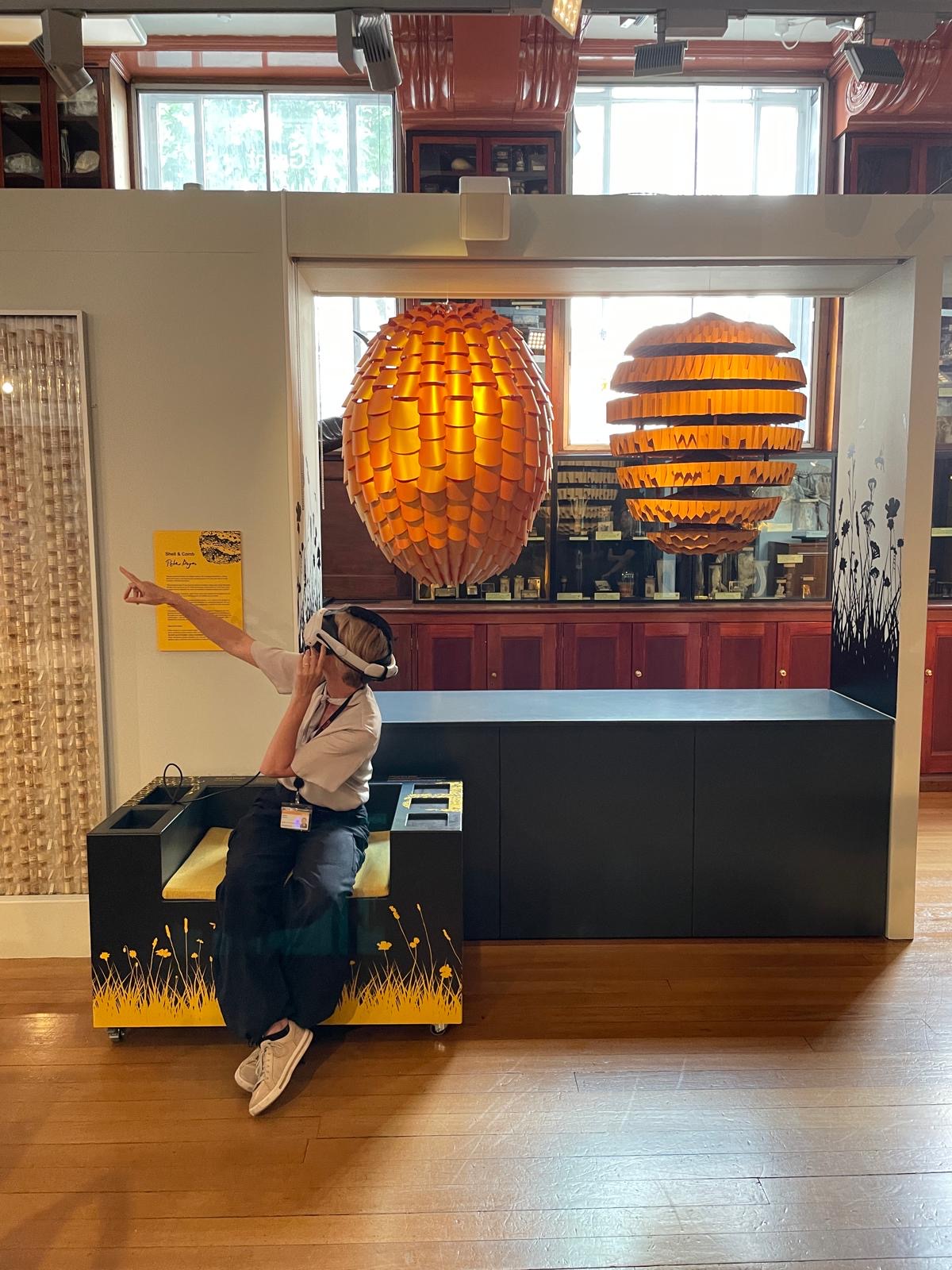
<p>Museums play a key role in bridging the communication gap between scientists and the public. Louisa’s project explored the potential of museums to positively reshape public perception of widely disliked organisms through the case study of the <a href="https://www.ucl.ac.uk/museums-collections/events/2025/jun/world-wasps"><em>World of Wasps</em> exhibition</a> at the UCL Grant Museum of Zoology. She interviewed over 350 visitors to the museum in 2025-2026, to understand the power of exhibitions in communication and changing people’s hearts and minds about one of the world’s least loved insects, the wasps!</p>]]></content><author><name></name></author><summary type="html"><![CDATA[Sept 2025-March 2026]]></summary><media:thumbnail xmlns:media="http://search.yahoo.com/mrss/" url="https://sumner-lab.github.io/website/wp-content/uploads/2026/01/me-waspVR1-768x1024.jpg" /><media:content medium="image" url="https://sumner-lab.github.io/website/wp-content/uploads/2026/01/me-waspVR1-768x1024.jpg" xmlns:media="http://search.yahoo.com/mrss/" /></entry><entry><title type="html">Sophie Staples. Assessing the impact of land-use on fluctuating asymmetry and body size in the common yellow jacket wasp (Vespula vulgaris)</title><link href="https://sumner-lab.github.io/website/sophie-staples-assessing-the-impact-of-land-use-on-fluctuating-asymmetry-and-body-size-in-the-common-yellow-jacket-wasp-vespula-vulgaris/" rel="alternate" type="text/html" title="Sophie Staples. Assessing the impact of land-use on fluctuating asymmetry and body size in the common yellow jacket wasp (Vespula vulgaris)" /><published>2026-01-29T00:00:00+00:00</published><updated>2026-01-29T00:00:00+00:00</updated><id>https://sumner-lab.github.io/website/sophie-staples-assessing-the-impact-of-land-use-on-fluctuating-asymmetry-and-body-size-in-the-common-yellow-jacket-wasp-vespula-vulgaris</id><content type="html" xml:base="https://sumner-lab.github.io/website/sophie-staples-assessing-the-impact-of-land-use-on-fluctuating-asymmetry-and-body-size-in-the-common-yellow-jacket-wasp-vespula-vulgaris/"><![CDATA[<p>UCL Student Sophie Staples on her MSci Research Project with the Sumner Lab</p>

<p>Using samples collected as part of the Big Wasp Survey, Sophie is exploring the effects of land-use on development of the common yellow-jacket wasp. <em>Vespula vulgaris</em></p>]]></content><author><name></name></author><summary type="html"><![CDATA[UCL Student Sophie Staples on her MSci Research Project with the Sumner Lab]]></summary></entry><entry><title type="html">Where Hornets Are Queens and Not Pests: A Journey Into the Land of Hills</title><link href="https://sumner-lab.github.io/website/where-hornets-are-queens/" rel="alternate" type="text/html" title="Where Hornets Are Queens and Not Pests: A Journey Into the Land of Hills" /><published>2025-06-04T00:00:00+00:00</published><updated>2025-06-04T00:00:00+00:00</updated><id>https://sumner-lab.github.io/website/where-hornets-are-queens</id><content type="html" xml:base="https://sumner-lab.github.io/website/where-hornets-are-queens/"><![CDATA[<p><em>Femi Ezhuthupallickal Benny on her recent fieldwork in Nagaland, India — first prize, Doctoral School Blog Competition 2025.</em></p>

<p><strong>What comes to mind when you hear “hornets”?</strong></p>

<p>For most people, it’s fear, hatred, stings and danger. But if you ask me, it sparks curiosity — <em>which species is it? Where was it spotted? What was it doing?</em> You cannot expect otherwise from someone doing a PhD on the ecology and behaviour of hornets, focusing on the Asian giant hornet (<em>Vespa mandarinia</em>).</p>

<p>Ranked by BBC Wildlife as the world’s sixth most dangerous insect, the Asian giant hornet has been in the spotlight since 2019, following its invasion of Washington, USA and British Columbia, Canada — earning it the dramatic nickname “the murder hornet.” How murderous are they really? That’s something to study from their homeland — East, South and Southeast Asia. My journey to study the hornets took me to Nagaland, India: the land of hills, the home of the Nagas, and the Indian state with the highest diversity of hornets. I’m looking at how the indigenous Naga people co-exist with these many “murderous” hornets.</p>

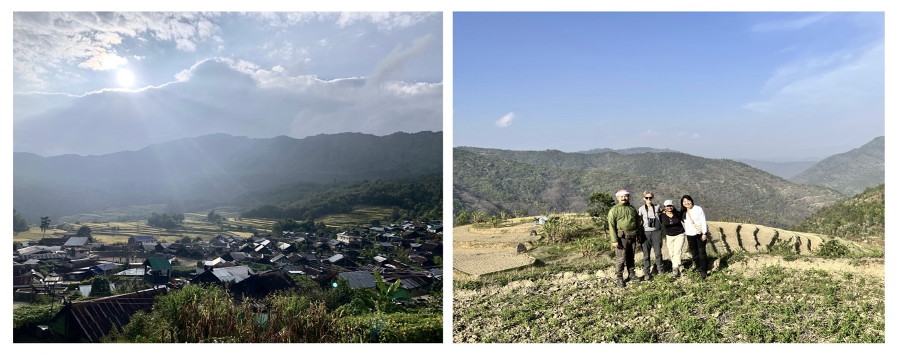
<p><img src="/website/wp-content/uploads/2025/06/image.png" alt="Zapami village, Phek district, Nagaland, with the community forest in the background; the community forest of Zelome village, Phek district, Nagaland." /></p>

<p><strong>Stepping into the home of hornets</strong></p>

<p>When I arrived in Nagaland, it wasn’t just the dreamy landscape that fascinated me, but the way of life of the Naga people, deeply rooted in nature. My research took me to two major indigenous communities — the Angami and the Chakesang, in Kohima and Phek districts respectively.</p>

<p>Insects, especially social wasps, aren’t just part of the landscape here — they’re part of the culture. Among them, hornets of the genus <em>Vespa</em> hold a special place, and <em>Vespa mandarinia</em> — the infamous murder hornet — is the most revered. Far from being seen as pests or dangerous, they’re a prized delicacy and a source of livelihood. Over generations, the Naga people have mastered the art of semi-domesticating these insects, harvesting them with traditional methods and selling them for a substantial part of their annual income.</p>

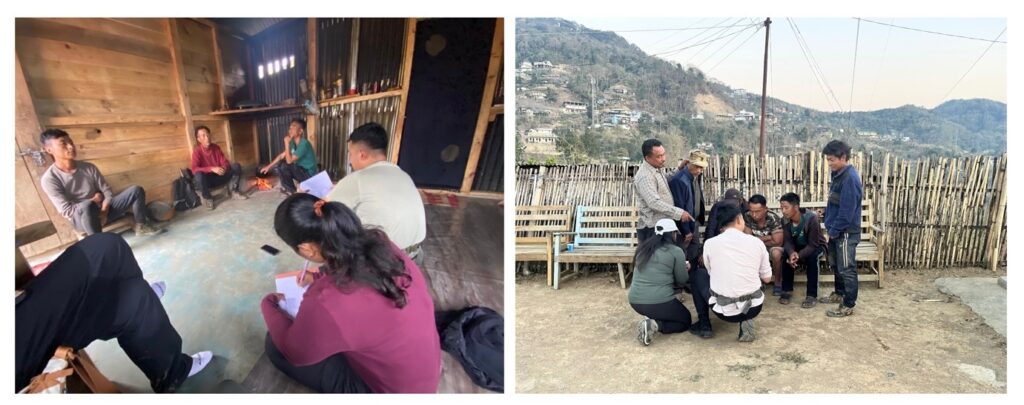
<p><img src="/website/wp-content/uploads/2025/06/image-1024x405.jpeg" alt="Conducting ethnographic surveys in the field." /></p>

<p>People here don’t panic on seeing a hornet — they approach them with care and skills backed by age-old traditional knowledge. They know where nests are, even if they’re ten kilometres deep in the community forests. They know when larvae have hatched and when workers and reproductives have emerged. They follow the hornets as they emerge from hibernation and locate their initial hives, which are relocated to a convenient spot inside the community forest, left to grow, and harvested during September–October. Harvested hives of <em>Vespa mandarinia</em> sell for prices as high as £500.</p>

<p><strong>My PhD: more than just hornet ecology</strong></p>

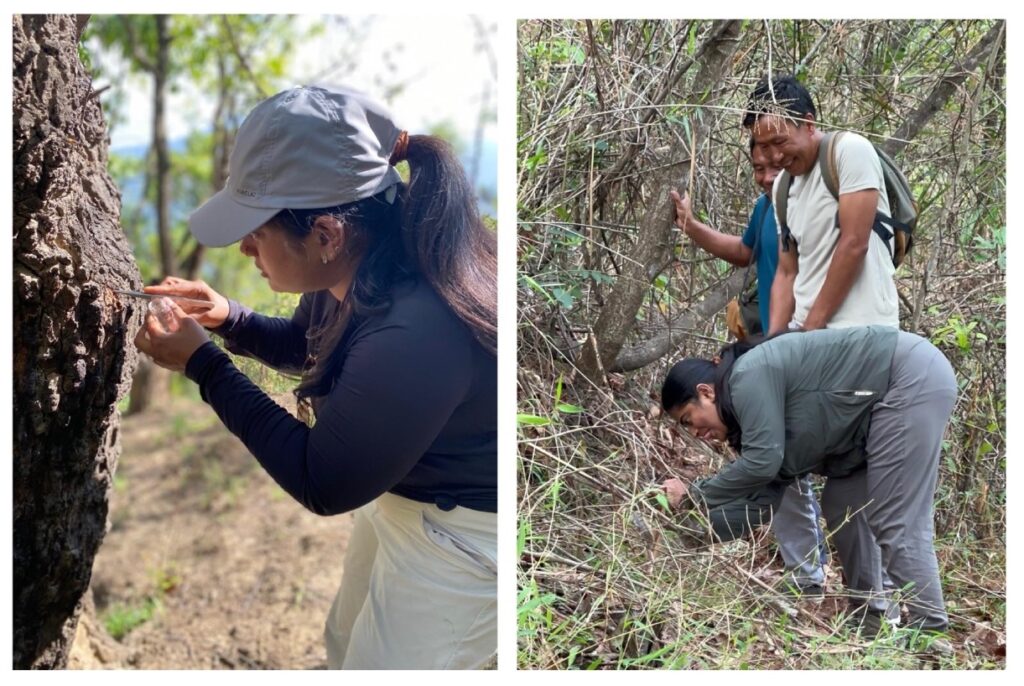
<p>When I began this PhD, I thought it would be all about hornets — their behaviour and ecology. I never imagined it would also be about people. Spending time with these communities in the hills of Nagaland has made me understand that here, the boundary between the human and insect worlds blurs. Studying hornets means listening to farmers, hunters, elders, and children; learning local names, customs, and culture. These practices hold ecological wisdom that scientific papers often miss — when hornets are most aggressive, how weather affects them, how to avoid provoking them.</p>

<p><img src="/website/wp-content/uploads/2025/06/image-1-1024x686.jpeg" alt="Learning about hornet ecology from the communities." /></p>

<p>As I collect data on hornet colonies, I’m also collecting stories — of stings, escapes, harvests, and rituals. In doing so, I’m learning that my PhD is a bridge not just between London and Nagaland, but between two ways of knowing the world: one through scientific field notes, and the other through lived experience.</p>]]></content><author><name></name></author><summary type="html"><![CDATA[Femi Ezhuthupallickal Benny on her recent fieldwork in Nagaland, India — first prize, Doctoral School Blog Competition 2025.]]></summary><media:thumbnail xmlns:media="http://search.yahoo.com/mrss/" url="https://sumner-lab.github.io/website/wp-content/uploads/2025/06/image.png" /><media:content medium="image" url="https://sumner-lab.github.io/website/wp-content/uploads/2025/06/image.png" xmlns:media="http://search.yahoo.com/mrss/" /></entry><entry><title type="html">Jéferson Pedrosa dos Santos – on his six month project with the Sumner Lab</title><link href="https://sumner-lab.github.io/website/jeferson-pedrosa-dos-santos-on-his-six-month-project-with-the-sumner-lab/" rel="alternate" type="text/html" title="Jéferson Pedrosa dos Santos – on his six month project with the Sumner Lab" /><published>2025-01-23T00:00:00+00:00</published><updated>2025-01-23T00:00:00+00:00</updated><id>https://sumner-lab.github.io/website/jeferson-pedrosa-dos-santos-on-his-six-month-project-with-the-sumner-lab</id><content type="html" xml:base="https://sumner-lab.github.io/website/jeferson-pedrosa-dos-santos-on-his-six-month-project-with-the-sumner-lab/"><![CDATA[<p>Jéferson is a PhD student at the <a href="https://www.researchgate.net/institution/University-of-Sao-Paulo?_tp=eyJjb250ZXh0Ijp7ImZpcnN0UGFnZSI6InByb2ZpbGUiLCJwYWdlIjoicHJvZmlsZSJ9fQ">University of Sao Paulo</a> who recently completed a 6 month project with the Sumner Lab involving transcriptomics in the neotropical wasp <em>Zethus miniatus</em></p>

<figure class="wp-block-image aligncenter size-large is-resized">
<a href="/website/wp-content/uploads/2025/01/image-3.png"><img src="/website/wp-content/uploads/2025/01/image-3-768x1024.png" class="wp-image-2187" style="width:330px;height:auto" loading="lazy" decoding="async" srcset="/website/wp-content/uploads/2025/01/image-3-768x1024.png 768w, /website/wp-content/uploads/2025/01/image-3-225x300.png 225w, /website/wp-content/uploads/2025/01/image-3.png 886w" sizes="auto, (max-width: 768px) 100vw, 768px" width="768" height="1024" /></a>
</figure>

<p>“I am a PhD student in Brazil and I came to develop a project with transcriptomes of the neotropical wasp <em>Zethus miniatus</em> for 6 months (August 2024 to January 2025) to work in the Sumner lab, under the supervision of Prof. Seirian Sumner and Dr. Cintia Akemi Oi.</p>

<p>Learning how to analyze transcriptomes was essential both for the proposed project, but also to help develop new projects in this area in Brazil. The experience here at Sumner Lab was wonderful and unforgettable. I participated in different activities that help us students in our personal and professional development. As a PhD student in Brazil, this experience allowed me to learn about new research tools, new work environments and a new vision of research focused on internationalization. In addition, interacting with PhD students in another country was very interesting and necessary to understand how a laboratory outside Brazil works and how research is done abroad. This experience for a PhD student is enriching and fundamental. Finally, this process is important for all PhD students around the world, because it is an experience that challenges you every minute, not only because the language or culture is different, but because science is universal and you have the skills and knowledge to collaborate with anyone in the world, and that is fascinating.</p>

<p>Participating in the Sumner lab meeting was a great pleasure and a great learning experience. The lab meetings take place every Thursday and it is always a very professional environment, but also very family-like. Every week we have different activities, where students or guests can present their projects or results and receive feedback from the group. This interaction is excellent, because the students have this weekly monitoring with all the members of the lab and individual meetings with Prof. Seirian. The discussions at the lab meeting are always very objective and all members participate, which makes the subject very interesting. This research group is very special. Prof. Seirian is always very enthusiastic and receptive to working on new projects, and this is reflected in all members of the lab. I would say that it is an excellent place to develop new, creative and inspiring projects. I could not fail to mention Dr. Cintia Oi, who was my co-supervisor. Dr. Cintia and Prof. Dr. Seirian share the same energy in planning and developing new projects. They are always ready for any challenge. So, it is always a pleasure to work with people who inspire you, as an example of professionals, but also as people.</p>

<p>Thank you very much to everyone for this experience.”</p>

<hr />

<p>Good luck with the rest of your PhD Jéferson – we will miss you!</p>

<figure class="wp-block-image size-large">
<a href="/website/wp-content/uploads/2025/01/4bfe0aa4-d57d-4d20-92e6-717fecf7d13f.jpg"><img src="/website/wp-content/uploads/2025/01/4bfe0aa4-d57d-4d20-92e6-717fecf7d13f-1024x768.jpg" class="wp-image-2282" loading="lazy" decoding="async" srcset="/website/wp-content/uploads/2025/01/4bfe0aa4-d57d-4d20-92e6-717fecf7d13f-1024x768.jpg 1024w, /website/wp-content/uploads/2025/01/4bfe0aa4-d57d-4d20-92e6-717fecf7d13f-300x225.jpg 300w, /website/wp-content/uploads/2025/01/4bfe0aa4-d57d-4d20-92e6-717fecf7d13f-768x576.jpg 768w, /website/wp-content/uploads/2025/01/4bfe0aa4-d57d-4d20-92e6-717fecf7d13f-1536x1152.jpg 1536w, /website/wp-content/uploads/2025/01/4bfe0aa4-d57d-4d20-92e6-717fecf7d13f.jpg 2048w" sizes="auto, (max-width: 1024px) 100vw, 1024px" width="1024" height="768" /></a>
</figure>]]></content><author><name></name></author><summary type="html"><![CDATA[Jéferson is a PhD student at the University of Sao Paulo who recently completed a 6 month project with the Sumner Lab involving transcriptomics in the neotropical wasp Zethus miniatus]]></summary><media:thumbnail xmlns:media="http://search.yahoo.com/mrss/" url="https://sumner-lab.github.io/website/wp-content/uploads/2025/01/image-3-768x1024.png" /><media:content medium="image" url="https://sumner-lab.github.io/website/wp-content/uploads/2025/01/image-3-768x1024.png" xmlns:media="http://search.yahoo.com/mrss/" /></entry><entry><title type="html">Sreya Magar: Evolution of Prey Selection and Life History Traits in Sphecidae Wasps</title><link href="https://sumner-lab.github.io/website/sreya-magar-evolution-of-prey-selection-and-life-history-traits-in-sphecidae-wasps/" rel="alternate" type="text/html" title="Sreya Magar: Evolution of Prey Selection and Life History Traits in Sphecidae Wasps" /><published>2025-01-23T00:00:00+00:00</published><updated>2025-01-23T00:00:00+00:00</updated><id>https://sumner-lab.github.io/website/sreya-magar-evolution-of-prey-selection-and-life-history-traits-in-sphecidae-wasps</id><content type="html" xml:base="https://sumner-lab.github.io/website/sreya-magar-evolution-of-prey-selection-and-life-history-traits-in-sphecidae-wasps/"><![CDATA[<p><em>UCL Msc Student Sreya Magar on her MSc Research Project with the Sumner Lab</em> </p>

<figure class="wp-block-image size-full is-resized">
<a href="/website/wp-content/uploads/2025/01/sreya.jpg"><img src="/website/wp-content/uploads/2025/01/sreya.jpg" class="wp-image-2184" style="width:269px;height:auto" loading="lazy" decoding="async" width="212" height="271" /></a>
</figure>

<p>Hi, I’m Sreya and I’m a MSci Zoology student in my final year. For my research project I am looking at the evolution of prey selection and life history traits in the Sphecidae family, working with Prof Seirian Sumner and Idris Adams. Specifically, I am looking at how life-history traits related to nesting behaviour interact and evolve with prey type selection. I’ve been reading lots of literature to create a dataset and then using PSVt (Phylogenetic Species Variability, taxonomic) and bipartite networks to look at prey specialism and generalism in the wasp species. Additionally, I’m using ancestral state reconstruction to identify switches in prey types across the phylogeny to determine which life history traits are correlated with prey type, shifts in prey type or prey specialism. As someone who is usually terrified of wasps (and most other insects!), this project has really been truly eye-opening. It has helped me appreciate wasps, not just as efficient hunters and skilled architects but also for their many unseen contributions to the natural world.  </p>

<p>I have thoroughly enjoyed my time at the Sumner lab; everyone has been so friendly and supportive! I have especially loved the weekly lab meetings, learning about everyone else’s research, and having lots of interesting guests. It’s been a fantastic experience!</p>]]></content><author><name></name></author><summary type="html"><![CDATA[UCL Msc Student Sreya Magar on her MSc Research Project with the Sumner Lab ]]></summary><media:thumbnail xmlns:media="http://search.yahoo.com/mrss/" url="https://sumner-lab.github.io/website/wp-content/uploads/2025/01/sreya.jpg" /><media:content medium="image" url="https://sumner-lab.github.io/website/wp-content/uploads/2025/01/sreya.jpg" xmlns:media="http://search.yahoo.com/mrss/" /></entry><entry><title type="html">Daniel Altair Saureu Velasco: Transcriptomics of caste conflict in Argentine ants</title><link href="https://sumner-lab.github.io/website/daniel-altair-saureu-velasco-transcriptomics-of-caste-conflict-in-argentine-ants/" rel="alternate" type="text/html" title="Daniel Altair Saureu Velasco: Transcriptomics of caste conflict in Argentine ants" /><published>2024-12-24T00:00:00+00:00</published><updated>2024-12-24T00:00:00+00:00</updated><id>https://sumner-lab.github.io/website/daniel-altair-saureu-velasco-transcriptomics-of-caste-conflict-in-argentine-ants</id><content type="html" xml:base="https://sumner-lab.github.io/website/daniel-altair-saureu-velasco-transcriptomics-of-caste-conflict-in-argentine-ants/"><![CDATA[<p>Visiting PhD student from Autonomous University of Barcelona (Spain)</p>

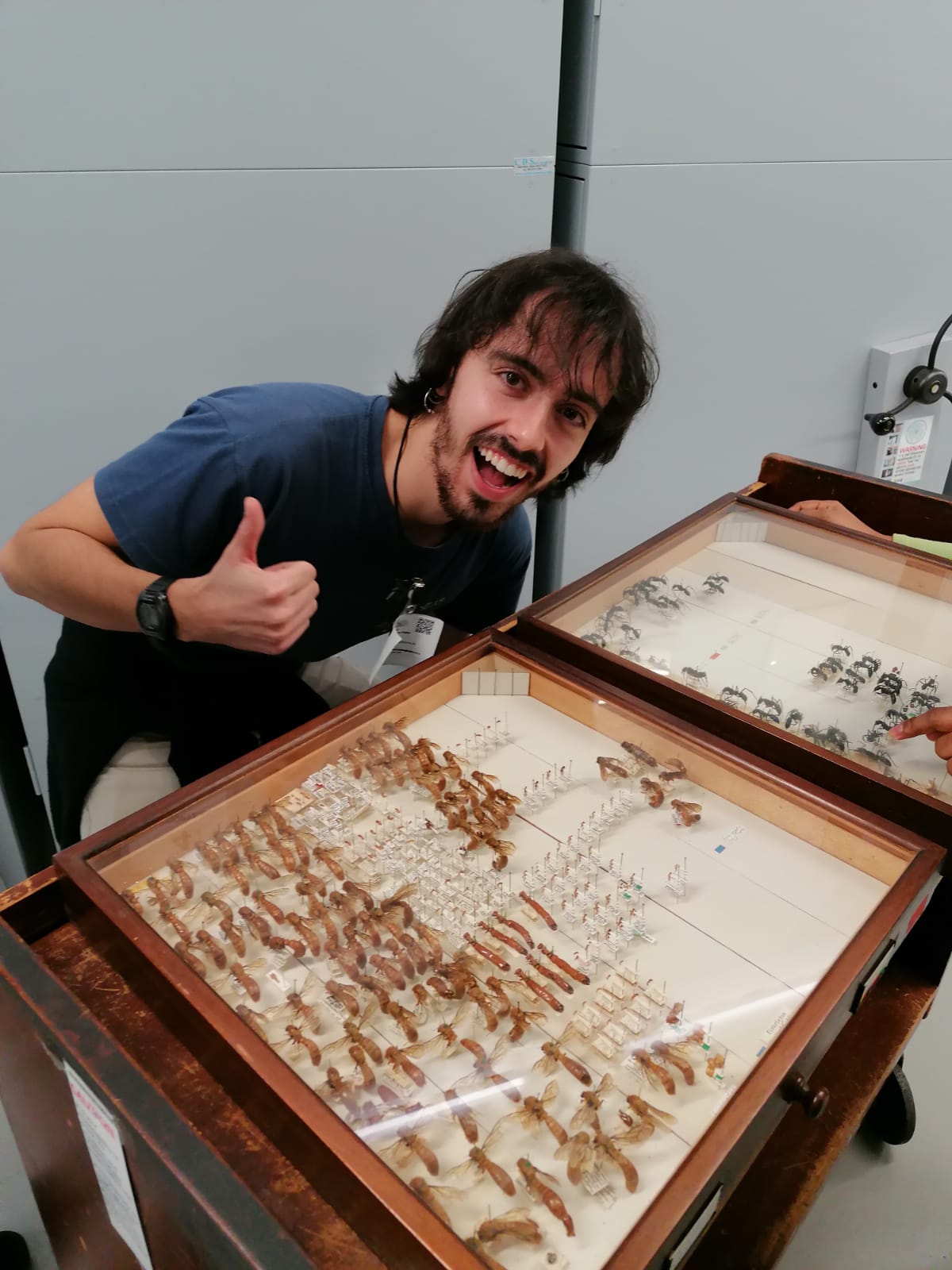
<p>1st year PhD student Daniel Saureu from the Autonomous University of Barcelona visited the Sumner Lab for a month between November and December 2024. His visit aimed to learn the most relevant techniques to analyse transcriptomic data for an experiment regarding caste fate conflict in the Argentine ant.</p>

<p>“My time on the Sumner Lab was an incredibly enjoyable and insightful experience! Although my stay was relatively short, I returned home with a deeper understanding of bioinformatics analyses and loved every moment I spent there.</p>

<p>I was also incredibly lucky to attend Wasp day 2024 during my stay at the Lab. Exploring the Natural History Museum’s entomological collection was an unforgettable experience, and I especially enjoyed looking at a particular group of wingless wasps – better known as ants!</p>

<p>Another major highlight of my visit was presenting my findings on the transcriptomic response to juvenile hormone in the Argentine ant at the NW-section IUSSI meeting. The feedback I received from both Lab members and meeting attendees was incredibly valuable and will help me refine my ideas for the experiment.</p>

<p>“Overall, my visit to the lab was an amazing experience that I believe will help me become a better scientist. Thank you to everyone in the Sumner Lab for welcoming me so warmly, and for showing me how fun and inspiring scientists can be! I am already looking forward to visiting you again. Until then, keep on spreading the wasp love!!! I can say I appreciate wasps even more after sharing some time with all of you ;)”</p>

<figure class="wp-block-image size-large is-resized">
<a href="/website/wp-content/uploads/2025/01/NHM_ants_photo-1.jpeg"><img src="/website/wp-content/uploads/2025/01/NHM_ants_photo-1-768x1024.jpeg" class="wp-image-2271" style="width:474px;height:auto" loading="lazy" decoding="async" srcset="/website/wp-content/uploads/2025/01/NHM_ants_photo-1-768x1024.jpeg 768w, /website/wp-content/uploads/2025/01/NHM_ants_photo-1-225x300.jpeg 225w, /website/wp-content/uploads/2025/01/NHM_ants_photo-1-1152x1536.jpeg 1152w, /website/wp-content/uploads/2025/01/NHM_ants_photo-1.jpeg 1200w" sizes="auto, (max-width: 768px) 100vw, 768px" width="768" height="1024" /></a>
</figure>]]></content><author><name></name></author><summary type="html"><![CDATA[Visiting PhD student from Autonomous University of Barcelona (Spain)]]></summary><media:thumbnail xmlns:media="http://search.yahoo.com/mrss/" url="https://sumner-lab.github.io/website/wp-content/uploads/2025/01/NHM_ants_photo-1-768x1024.jpeg" /><media:content medium="image" url="https://sumner-lab.github.io/website/wp-content/uploads/2025/01/NHM_ants_photo-1-768x1024.jpeg" xmlns:media="http://search.yahoo.com/mrss/" /></entry></feed>